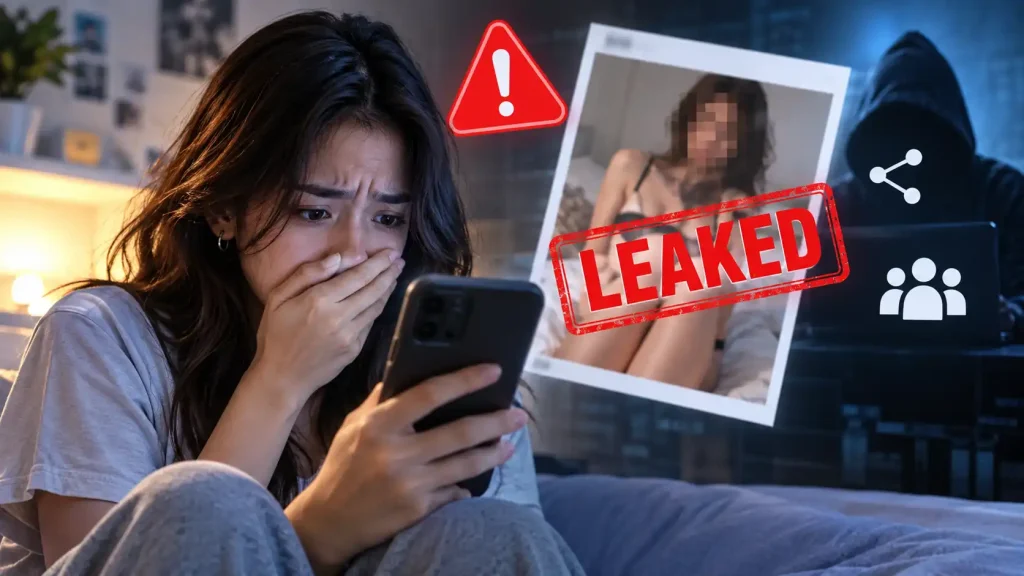
Imagine waking up one morning and discovering that your private photos have been shared online without your permission. Maybe someone you trusted posted them on social media, sent them to strangers, or uploaded them to a website. Suddenly, something deeply personal has become public.
So, what if someone leaks your private photos? The consequences can go beyond embarrassment. You may experience emotional distress, cyberbullying, damage to your reputation, privacy violations, and even financial or professional problems. However, having your private photos leaked does not mean your life is ruined. There are practical steps you can take to protect yourself, report the incident, and regain control of the situation.
Let’s explore what could happen and what you should do if you ever find yourself in this situation.
1. Your Private Photos Could Spread Across the Internet
One of the biggest problems with leaked private photos is how quickly digital content can spread.
Someone might initially share your pictures with a small group of people. However, once those images are uploaded to social media, messaging groups, forums, or websites, other users can download, screenshot, and redistribute them.
Even if the original post gets deleted, copies may continue circulating elsewhere.
This happens because digital content is relatively easy to duplicate. A single person sharing your photos could potentially expose them to thousands of people within hours.
Unfortunately, removing the original upload does not guarantee that every copy will disappear.
2. You May Experience Emotional and Psychological Stress
Having private photos exposed without consent can be an extremely distressing experience.
You might feel embarrassed, angry, anxious, betrayed, or frightened about who has seen the images. Some people may even struggle to sleep or concentrate because they constantly worry about the photos spreading further.
The emotional impact can become worse if the person responsible is someone you previously trusted, such as an ex-partner, close friend, or acquaintance.
You may also begin avoiding social situations because you fear being judged or recognized.
It is important to understand that these feelings are valid. Having your private photos shared without permission is a violation of your privacy. You are not responsible for someone else’s decision to distribute them.
If the situation becomes overwhelming, speaking with a trusted person or mental health professional can help you manage the emotional impact.
3. Someone Could Use Your Photos for Blackmail
Another serious possibility is sextortion.
Sextortion happens when someone threatens to distribute private or intimate images unless the victim gives them something in return.
For example, a person might threaten to send your photos to your family, friends, employer, or social media followers unless you pay money.
In other situations, the perpetrator may demand additional intimate images, personal information, or other favors.
This can create an extremely frightening situation because the victim may feel forced to cooperate to prevent further exposure.
However, paying a blackmailer does not guarantee that they will delete your photos or stop making threats. They may simply demand more money or continue exploiting you.
If someone threatens you with your private photos, preserve the evidence, avoid sending additional images or money, and report the account to the relevant platform and authorities.
4. Your Personal and Professional Reputation Could Be Affected
Leaked private photos can sometimes affect how other people perceive you.
Friends, relatives, coworkers, or strangers might discover the images and make assumptions about your personal life. In some cases, the situation can lead to gossip, harassment, discrimination, or unwanted attention.
Professional consequences are also possible, particularly if the images become widely circulated or are deliberately sent to your workplace.
However, an important distinction remains: someone else’s decision to expose your private photos does not define your character, professionalism, or worth.
You do not owe everyone an explanation about something that happened without your consent.
If the incident affects your employment, consider documenting any harassment or discrimination and seeking appropriate legal or professional support.
5. Your Photos Could Be Used for Fake Accounts and Identity Abuse
Once someone obtains your private pictures, they may use them for purposes beyond simply sharing them.
For example, a perpetrator could:
- Create fake social media accounts using your identity.
- Use your pictures to impersonate you.
- Contact your friends or family while pretending to be you.
- Create misleading or manipulated images.
- Use your photos to scam other people.
Artificial intelligence has also made image manipulation increasingly accessible.
Some individuals use AI tools to create non-consensual sexual deepfakes by combining someone’s real face with fabricated explicit imagery.
This means that even ordinary personal photographs can potentially be misused.
If you discover a fake account or manipulated image, report it immediately and keep evidence of the account, URL, and relevant messages.
6. Can You Get Leaked Private Photos Removed From the Internet?
Yes, in many situations, you can request the removal of non-consensual private images.
Most major social media platforms have policies against sharing intimate images without permission.
Depending on the platform, you can report the content as non-consensual intimate imagery, sexual exploitation, harassment, or impersonation.
You can also contact the website hosting the images and request removal.
If intimate images of you were taken when you were under 18, specialized services such as Take It Down from the National Center for Missing & Exploited Children may help prevent their online sharing.
For adults, StopNCII.org provides a tool that can help participating platforms detect and prevent the sharing of intimate images without requiring users to upload the actual images.
However, removal is not always immediate or guaranteed. Images may have been copied to websites that do not cooperate with removal requests.
That is why reporting the original content as soon as possible is important.
7. What Should You Do If Someone Leaks Your Private Photos?
If your private photos have been leaked, taking the right steps can help reduce further damage.
Here are some practical actions to consider.
Step 1: Do Not Panic or Blame Yourself
Your first reaction might be fear or embarrassment. However, remember that sharing private images without consent is the responsibility of the person who distributed them.
You deserve support, not judgment.
Step 2: Save Evidence
Before reporting or blocking the perpetrator, preserve relevant evidence whenever it is safe to do so.
This may include:
- Screenshots of messages and threats.
- URLs of websites or social media posts.
- Usernames and account information.
- Dates and times of incidents.
- Payment demands or blackmail messages.
Do not redistribute the intimate images while collecting evidence. If the images involve someone who was under 18 when they were created, do not download, screenshot, or forward them.
Step 3: Report the Content
Use the platform’s official reporting system to flag the images.
Select the category that most accurately describes the violation, such as non-consensual intimate imagery, harassment, exploitation, or impersonation.
If the photos appear on an independent website, contact its abuse or content removal team.
Step 4: Secure Your Online Accounts
Change passwords for important accounts, especially your email and social media profiles.
Enable two-factor authentication and review active login sessions.
Also check whether your cloud storage, photo backups, or shared albums are accessible to someone else.
Step 5: Get Professional and Legal Support
If someone is threatening, blackmailing, or distributing your private images, consider contacting law enforcement or a qualified lawyer.
If you are in Indonesia, you can seek assistance through the police and relevant government channels for handling online violations.
You can also contact someone you trust for emotional support. You do not have to deal with the situation alone.
8. Is Leaking Someone’s Private Photos Illegal?
In many countries, sharing intimate images without the subject’s consent can result in legal consequences.
The exact laws depend on the country, the type of images, how they were obtained, and how they were distributed.
For example, in the United States, many states have laws addressing non-consensual distribution of intimate images. The federal TAKE IT DOWN Act, enacted in 2025, also addresses certain forms of non-consensual intimate imagery and requires covered platforms to provide a process for removing reported content.
In Indonesia, the distribution of private or intimate images may potentially involve provisions of the Electronic Information and Transactions Law (UU ITE), the Sexual Violence Crimes Law (UU TPKS), and other applicable regulations, depending on the circumstances.
Importantly, consent to take or send a private photograph does not automatically mean consent to publish or distribute it.
If you are dealing with an actual incident, getting advice from a qualified legal professional is the safest way to understand your options.
9. Can Your Life Go Back to Normal After Your Private Photos Are Leaked?
Yes. Although the experience can be painful, it does not have to define the rest of your life.
The internet can make embarrassing or deeply personal incidents feel permanent. However, public attention often changes over time, and many people successfully rebuild their confidence and sense of security after experiencing privacy violations.
You may need time to process what happened. You might also need to establish stronger digital boundaries, rebuild trust, or seek professional support.
Remember that your identity is much bigger than a collection of photographs.
You are not defined by what someone else chose to expose.
And most importantly, you do not have to face the situation alone.
Final Thoughts
So, what if someone leaks your private photos?
The consequences can include emotional distress, online harassment, blackmail, reputational damage, and serious privacy violations. In some situations, the images may spread beyond your control or be used for impersonation and other forms of abuse.
However, there are ways to respond.
Preserve evidence, report the content, secure your accounts, seek legal assistance when necessary, and reach out to people you trust.
Having your private photos leaked is not your fault. The person who distributes them without your consent is responsible for that violation.
Your privacy matters, your consent matters, and one incident does not determine your future.
Source: Ifniverse.com