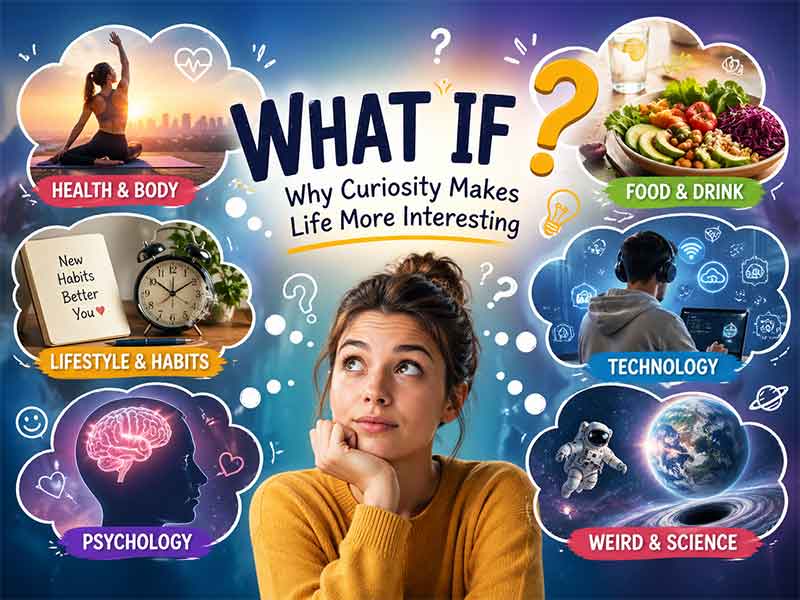
Have you ever asked yourself strange but fascinating questions like, “What if humans never needed sleep?” or “What if everyone stopped using phones for a week?” That simple phrase—what if—has the power to open doors to learning, imagination, and better decision-making. It encourages people to think deeper about health, food, habits, technology, psychology, and science in ways that feel fun instead of complicated.
Curiosity is one of the most valuable human traits. It helps us understand the world, solve problems, and see everyday life from a new perspective. Asking what if questions turns normal topics into exciting conversations. Instead of reading dry facts, people explore possibilities and outcomes that feel personal and memorable.
Health & Body: Understanding Ourselves Better
Many people wonder about their bodies but don’t always know where to start. Questions like “What if you stopped exercising for a month?” or “What if you drank only water for seven days?” create natural ways to learn about wellness. These scenarios make health information easier to understand because they connect facts to real life.
When people imagine changes in sleep, movement, diet, or stress, they often become more aware of their own habits. That awareness can inspire healthier choices without feeling forced or overwhelming.
Food & Drink: Everyday Choices Matter
Food is something everyone relates to, which makes it a perfect topic for curiosity-based content. Imagine questions such as “What if you ate spicy food every day?” or “What if coffee disappeared tomorrow?” These ideas are entertaining, but they also reveal how nutrition, culture, and routines shape daily life.
Even simple food questions can teach readers about digestion, hydration, cravings, or energy levels. Learning becomes enjoyable when it starts with a surprising scenario.
Lifestyle & Habits: Small Actions, Big Results
Daily habits often seem minor until we ask what happens if they change. What if you woke up at sunrise for 30 days? What if you deleted social media for a week? What if you walked instead of driving whenever possible?
Questions like these help people reflect on routines they rarely notice. Habits influence productivity, mood, relationships, and long-term success. Exploring possible outcomes can motivate practical improvements in everyday life.
Technology & Psychology: The Modern Mind
Technology has transformed how people think, work, and connect. Asking “What if the internet shut down for one day?” or “What if you checked your phone only twice a day?” reveals how dependent modern life has become on digital tools.
Psychology adds another layer by exploring thoughts, emotions, and behavior. Why do people procrastinate? Why do habits stick? Why do unusual stories capture attention? The brain loves patterns, mystery, and possibility—which is why what if questions feel so addictive.
Weird & Science: Fun Meets Discovery
Some of the best questions sound ridiculous at first. What if Earth stopped spinning? What if humans could breathe underwater? What if gravity became weaker for one hour? These scenarios are entertaining, but they also introduce real scientific principles in a way anyone can enjoy.
Weird questions make science approachable. They replace intimidation with wonder, which is often the first step toward learning.
Why “What If” Content Never Gets Old
People naturally want answers. They also enjoy being surprised. That combination makes curiosity-driven content timeless. Whether the topic is health, food, lifestyle, technology, psychology, or strange science, readers love discovering how the world works.
If you enjoy content that mixes useful facts with fun ideas, what if corner is the perfect place to start. Sometimes the simplest question leads to the most interesting answer.